Guideline
A practical guide that helps companies implement upcycling in a way that communicates well and is economically viable.
Research · Innovation sprint
Industrial upcycling of corporate wear. The potential of communication.
Companies that have their retired workwear upcycled by us talk about it in very different ways: on the intranet, on social media, in press releases, in their own fan shop, sometimes only as a footnote in the sustainability report. What this communication actually does for them has never been studied systematically. For us, one thing is clear: upcycling has far more communicative potential than most companies tap today. Together with TU Berlin, we are researching how to unlock it until February 2028.
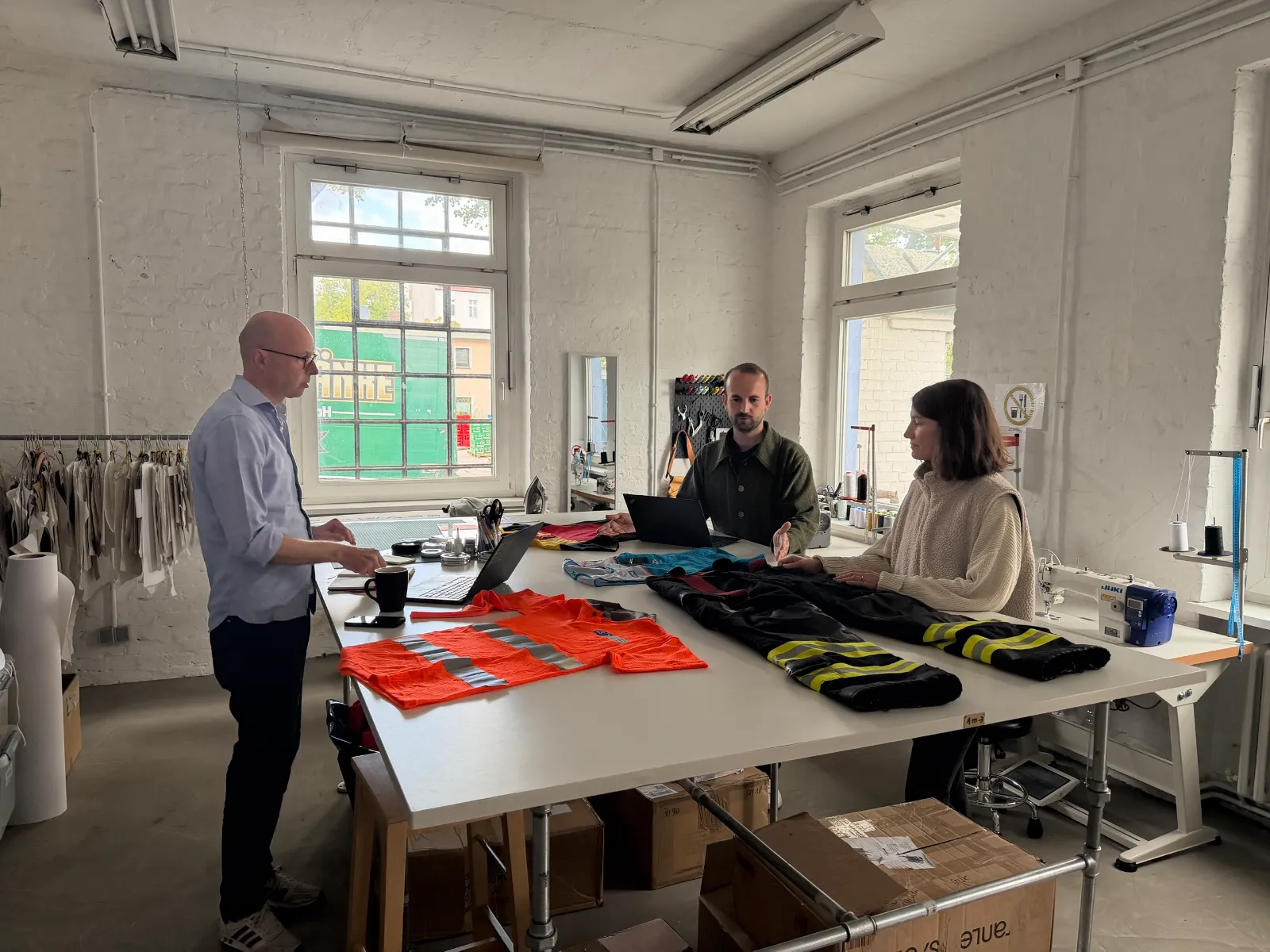
Background
The environmental and social problems of the textile industry are well known. Upcycling steps in where retired clothing would otherwise become waste, and combines environmental and social benefits with economic goals.
The challenges
High resource use
New clothing ties up a lot of material, energy and water.
Critical production conditions
Working conditions in garment production are a problem in many places.
Ever shorter use
Clothing is replaced faster, and its lifespan keeps shrinking.
Growing mountains of used textiles
More and more used textiles are piling up worldwide, with long-term consequences for the environment.
What upcycling can do
One question has barely been studied so far: what communicative value upcycling creates for companies. That is where UpKomm comes in.
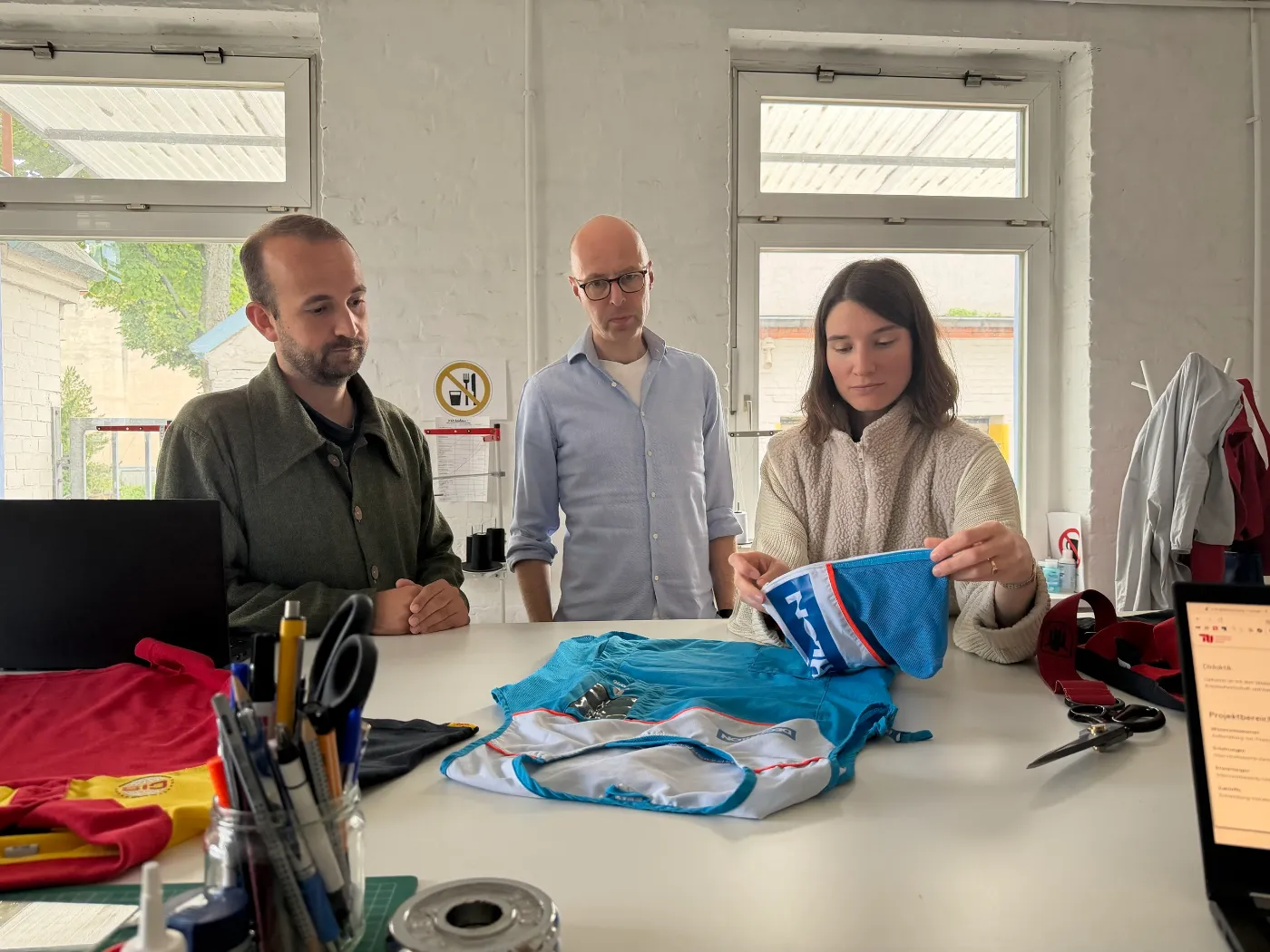
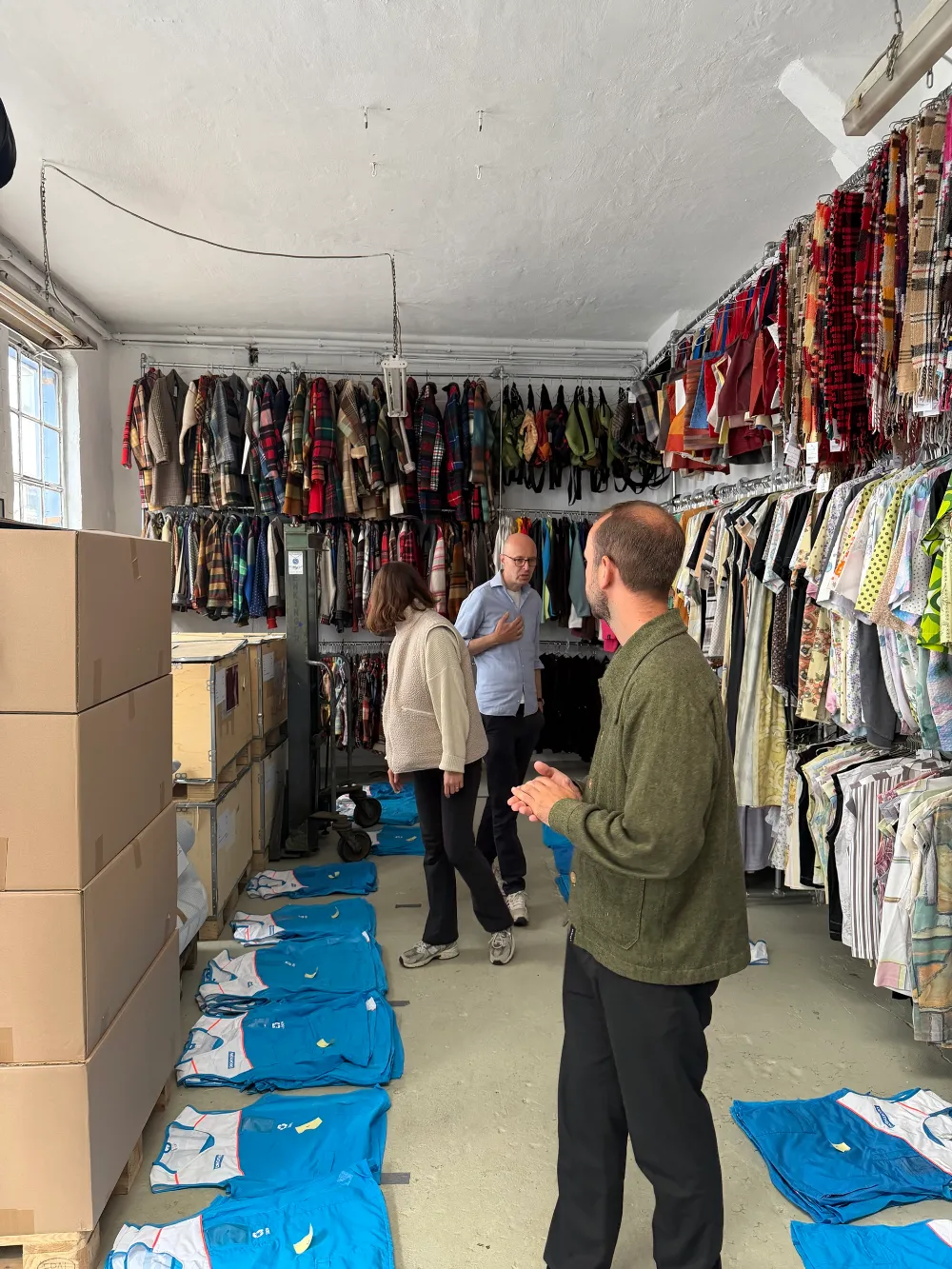
Behind the scenes
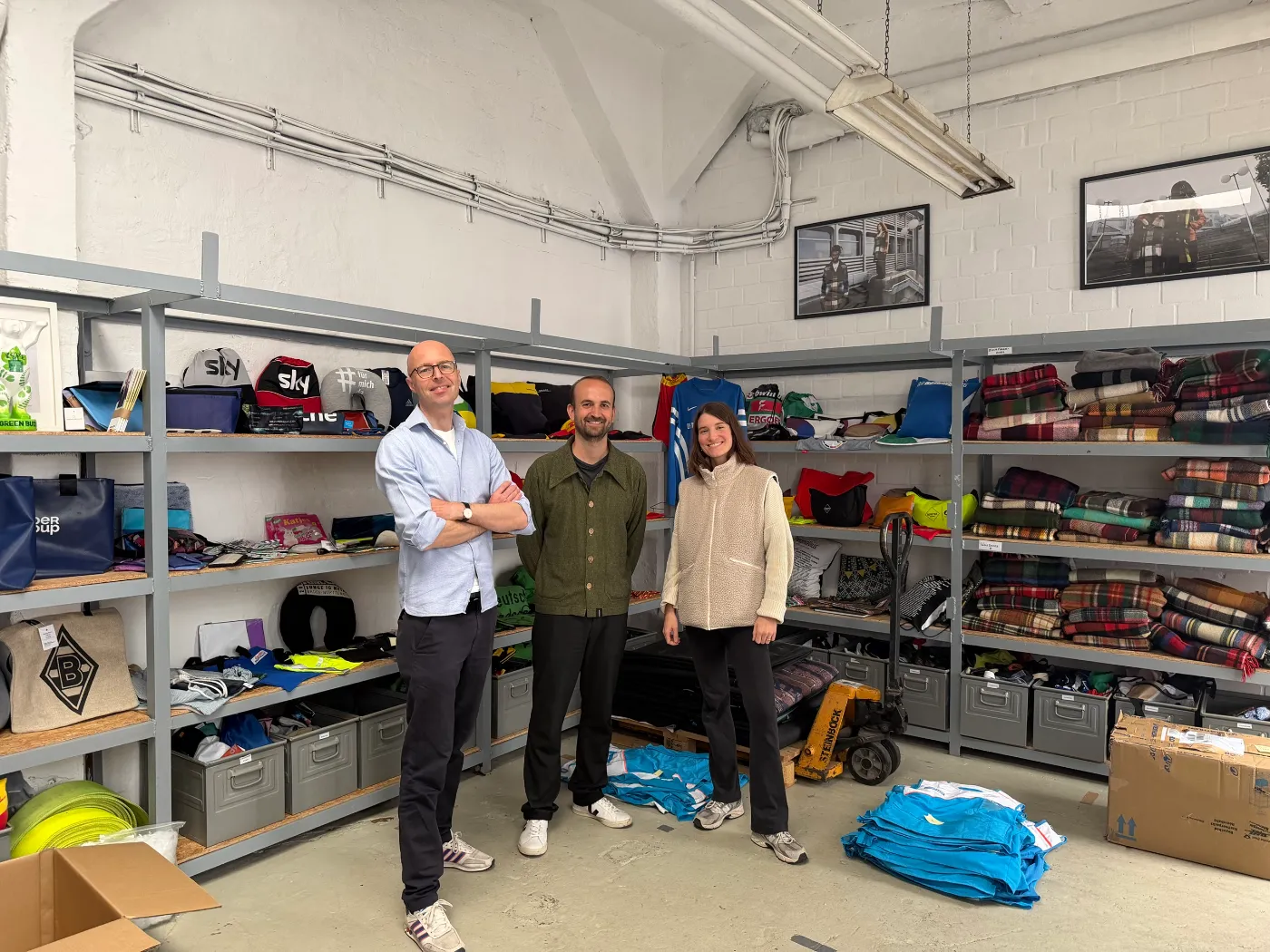
Starting point
We have mastered production. More than 1,000 product types we have developed and our large-scale projects to date prove it. That is why we have long supported our clients beyond manufacturing: from the initial idea to the finished product to communication inside and outside the company. To develop this offering further and understand our clients even better, we are now investigating the open questions scientifically.
The harder question comes before production: who in the company actually decides on an upcycling project? Marketing, procurement, HR or sustainability? Which objections come up before it gets started? And what does it deliver in the end, beyond a good feeling?
So far, there are no reliable answers to these questions. The EU ban on destroying unsold goods and the CSRD reporting requirements are raising the pressure to make circular measures verifiable. For that, companies need more than individual success stories. They need a solid basis for making decisions.
A second bottleneck lies with us. As long as every batch of used textiles is assessed individually, upcycling remains a project business. Without a standardized incoming-material assessment, it cannot become a routine process.
The research question
UpKomm combines our hands-on experience in the circular economy with TU Berlin's expertise in knowledge transfer and communication science. We examine the intersection of three research fields where reliable findings are still scarce, and one of the outcomes is a typology of the ways in which upcycling creates communicative value.
High quality, at scale
Used textiles are often turned into simple bags or one-off pieces today. UpKomm aims to make more demanding products, such as vests made from retired suit jackets, ready for series production. The key is a standardized assessment of the incoming material.
Approach
At the core are more than 50 conversations with companies that have already worked with us, and more than ten interviews with corporate wear manufacturers in Germany, Austria and Switzerland. TU Berlin is responsible for methodology and analysis; we contribute the practical experience and the material.
50+
Conversations with companies
10+
Interviews with manufacturers
4
Work packages
1
Guideline, tested on a real product
We systematically document what we have learned from our large-scale projects to date. The result is a standardized incoming-material assessment for used, ready-made textiles: the basis for building communicative value into the process from the start.
Interviews with our existing clients: how was the decision made internally, what hurdles came up, and what did the project do for reputation, brand and employees?
Conversations with corporate wear manufacturers about strategic decisions and market opportunities. They help decide whether circular models become the standard or remain the exception.
The findings are turned into practical recommendations that we test on a real product, such as a vest made from retired suit jackets.
Results
A practical guide that helps companies implement upcycling in a way that communicates well and is economically viable.
A framework that shows where and how upcycling creates communicative value for companies.
A standardized method for reliably assessing retired textiles: the step from project business to routine operations.
A higher-value upcycled product, such as a vest made from retired suit jackets, on which the guideline has to prove itself in practice.
The scientific results will be published as a freely accessible journal article.
Consortium
Coordination · Subproject A

We contribute proven practical knowledge of the economic levers, process requirements and regulation. We conduct the interviews with clients and manufacturers, develop the standardized incoming-material assessment and build the demonstrator on which the guideline has to prove itself.
Michael Pfeifer
Project lead, CEO & Co-Founder
Alicia Gerlitz
Senior Product Developer
Emily Wuschko
Junior Operations Manager
Juliusstraße 64, 12051 Berlin
Subproject B

The Institute of Language and Communication grounds the project in communication and knowledge-transfer research. It is responsible for the research design and the scientific analysis, develops the interview guides together with us, and translates the results into practical recommendations. The findings will be published as an open-access journal article.
PD Dr. habil. Thorsten Philipp
Private lecturer in Communication Science, focus on Political Communication | Advisor for Transdisciplinary Teaching
Straße des 17. Juni 135, 10623 Berlin
TU Berlin project pageGet involved
We will be conducting the interviews from December 2026. If you are responsible for procurement, sustainability, marketing or HR at a company, or if you manufacture corporate wear, your experience is valuable to us. An interview takes about half an hour, and TU Berlin carries out the scientific analysis.
Funding

UpKomm is funded by the Federal Ministry of Research, Technology and Space under the DATIpilot funding guideline, grant numbers 03DPC0323S (MOOT Upcycling GmbH) and 03DPC0323T (TU Berlin). The project runs from September 1, 2026 to February 29, 2028 and is part of the CirTex innovation community.